Die casting is an advanced metal forming process that uses high pressure to inject molten metal into a precise, reusable steel mold (known as a “die”). This process enables the efficient, high-volume production of metal parts with complex geometries, high dimensional accuracy, and an excellent surface finish. This guide will provide a comprehensive analysis of the die casting process, its core types, common materials, key applications, cost structure, and its advantages and disadvantages to inform your manufacturing project decisions.
Production Processes
Explore how we manufacture — each process is a standardized, quality-controlled, traceable workflow.
Individual Processes
Click any process to open its detail page.
1
Die Casting
Die casting is an advanced metal forming process that uses high pressure to inject molten metal into a precise, reusable steel mold.
View details
2
Die Struck
The die struck process is a method used in jewelry manufacturing to create intricate designs and patterns on metal surfaces.
View details
3
Enamel Color
Enamel color (Fill in the colors) is a very common technique in the production of badges, keychains, medals and other products.
View details
4
Material Inspection
All incoming materials are verified for grade, certificate and dimensions before entering production.
View details
5
Artwork Design and Approved
Our artists design the artwork based on the client's requirement, logo or draft and send it to the client for approved.
View details
6
Mold Made
Mold workshop will start to make the mold based the artwork that the client approved.
View details
7
Screen Printing
Screen printing is a surface decoration method for graphic elements that are not intended to sit inside enamel cells.
View details
8
UV Printing
UV printing is available for metal artwork that is not well represented by separated enamel fields.
View details
9
Clear Epoxy
Clear epoxy coating is an optional post-decoration process, including for badges.
View details
10
Metal Plating
Our custom metal plating capabilities include gold, silver, nickel, black nickel, antique bronze, antique silver and dual plating.
View details
11
Packaging & Shipping
The right packaging depends on the product and its use.
View details
12
Metal Polish
Metal surface polishing is a finishing operation that uses abrasive action.
View details
13
Inspection
Inspection the color, size and functional testing ensure conformance to drawings.
View details

Die Casting

Die Struck
The die struck process, also known as die striking or die stamping, is a method used in jewelry manufacturing to create intricate designs and patterns on metal surfaces. It is commonly employed in the production of items such as coins, medals, badges, and high-quality jewelry pieces.
Enamel Color
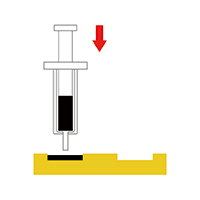
Soft enamel is a filled-color process used when artwork contains separate areas enclosed by metal lines or borders. The enamel sits below the raised metal features, leaving a recessed color surface. This height difference gives the design a clear metal-and-color structure.
An artwork review checks whether the color cells, metal borders and small design elements are practical for the selected product geometry. When a coated face is wanted, clear epoxy can be reviewed as a separate post-decoration option. Epoxy does not turn soft enamel into hard enamel, and the two finishes should not be described as the same construction.
Hard enamel is available for designs that need a smoother color surface while retaining metal borders between color areas. Unlike the recessed effect of soft enamel, the finished color areas present a more even face in relation to the surrounding metal design.
This process still relies on clear color separation. Adjacent colors need suitable divisions, and the artwork must show which lines are metal and which areas receive enamel. Fine marks that cannot be represented as practical enamel fields may need to be adjusted or considered for printing.
Our operation includes an enamel coloring and epoxy workshop with automatic and manual coloring functions.
Automatic dispensing can be considered for suitable repeated enamel areas. Manual coloring remains available when a design or part geometry requires direct operator handling.
Material Inspection
All incoming materials are verified for grade, certificate and dimensions before entering production.
Artwork Design and Approved
Our artists design the artwork based on the client's requirement, logo or draft and send it to the client for approved.
Mold Made
Mold workshop will start to make the mold based the artwork that the client approved.
Screen Printing
Screen printing is a surface decoration method for graphic elements that are not intended to sit inside enamel cells. It can be considered for defined text, line work, symbols and other printed artwork applied to a suitable metal surface.
This route is useful when adding metal dividers around every graphic element would change the design. It also gives buyers another way to place branding on a metal face without converting each printed feature into a recessed color area.
Process fit depends on the artwork and the available print area. Text, line detail, color layout and the relationship between the print and the surrounding metal all require review. We do not apply one fixed line-width or color-count rule to every product. The practical result depends on the complete design, surface and product geometry.
UV Printing
UV printing is available for metal artwork that is not well represented by separated enamel fields. It can reproduce fine graphic detail and tonal changes without requiring raised metal borders between every part of the printed image.
This makes UV printing a process to review for multi-tone logos, complex illustrations and graphics that contain visual transitions. It is different from enamel because the image is printed onto the surface rather than placed into defined metal cells.
UV printing and screen printing should not be treated as interchangeable labels. Screen printing is generally considered for clearly defined printed elements, while UV printing can be reviewed for finer or more varied graphic content. Final selection depends on the source artwork, the metal surface and the required visual result. We do not assign unverified claims about print resolution, outdoor life or ink performance to either process.
Clear Epoxy
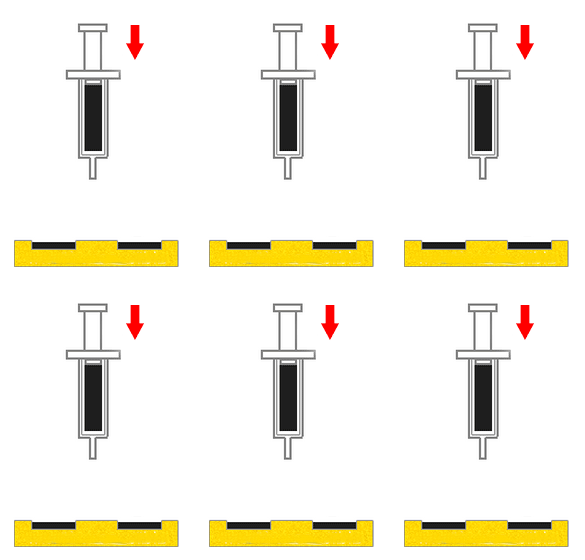
Clear epoxy coating is an optional post-decoration process, including for badges. It forms a transparent layer over the decorated face and changes how that surface looks and feels. The layer also separates the underlying printed or colored face from direct contact.
Epoxy is not enamel. Enamel provides the color inside defined areas, while epoxy is placed over an existing decoration. A printed badge, for example, can be reviewed with or without a clear epoxy layer depending on the desired presentation. Soft enamel may also be considered with a later clear coating when that combination suits the project.
Metal Plating
Our factory cannot make plating and must send our products to the profession plating factory because of the environmental protection and government regulation.
Our custom metal plating capabilities include gold, silver, nickel, black nickel, antique bronze, antique silver and dual plating for custom medals, challenge coins, pins, badges, trophies, plaques, keychains and bottle openers...... Sandblasting and matte finishing are also available when the design calls for a less reflective surface or contrast between selected areas.
Packaging & Shipping
Our standard packaging option is OPP Bags, these are included with all orders of custom products (unless upgraded).
The right packaging depends on the product and its use. Standard anti-scratch packing and OPP bags support basic separation. Bubble bags add cushioning between products. Velvet boxes provide a formal award or gift presentation, while paper and plastic display boxes serve different branding and visibility goals.OPP bags are individual packaging units that separate one product from the next. They are useful when medals, coins, pins or small promotional items need to remain organized for counting, sorting or distribution.
The bag fit must account for the complete product rather than the metal body alone. A medal ribbon, pin attachment, keyring or other hardware changes the space needed inside the bag. The product’s width, height, thickness and assembled shape should therefore be included in the packaging brief.
An OPP bag provides separation, but it is not the same as a cushioning package or presentation box. Products that need more protection from contact during handling may require a bubble bag instead.
When the packing complete, the goods can be prepare to shipping.
Metal Polish
Metal surface polishing is a finishing operation that uses abrasive action, electrochemical dissolution, or chemical reaction to reduce metal surface roughness (Ra) on metal parts, removing the microscopic peaks left by machining, casting, or additive manufacturing to produce a smoother, more controlled surface condition.
Inspection
Inspection the color, size and functional testing ensure conformance to drawings.
Process Flows
How individual processes are combined into manufacturing flows. Click any step to view its details.
Soft Enamel
11 stepsSoft enamel leaves colored areas below raised metal lines, creating a recessed surface with visible depth. Hard enamel brings the enamel and metal borders to an even level, creating a smooth face. That surface difference is the main factor when choosing between the two processes.
Hard Enamel
11 stepsDie Struck
8 stepsThe die struck process, also known as die striking or die stamping, is a method used in jewelry manufacturing to create intricate designs and patterns on metal surfaces. It is commonly employed in the production of items such as coins, medals, badges, and high-quality jewelry pieces.
Die Casting
8 stepsDie casting is an advanced metal forming process that uses high pressure to inject molten metal into a precise, reusable steel mold (known as a “die”). This process enables the efficient, high-volume production of metal parts with complex geometries, high dimensional accuracy, and an excellent surface finish. This guide will provide a comprehensive analysis of the die casting process, its core types, common materials, key applications, cost structure, and its advantages and disadvantages to inform your manufacturing project decisions.
Printing
10 stepsOffset printing is the perfect alternative when the enamel filled process is not compatible with the design. It enables us to create exact reproduction of your artwork. The printing is done directly on brass, aluminum, or stainless steel and can be plated with gold or nickel plating as an option. An epoxy dome is applied to insure a durable and glossy finish.
Colors can be printed on color-filled or plated pieces one after another. We also have pad printing machine to print on curve surface. Both methods give the advantage of printing small and fine letters clearly and in different colors.
UV printing is a modern printing technique that uses ultraviolet (UV) light to cure, or dry, specially formulated ink directly on the printing surface. Unlike traditional printing methods that rely on heat or air drying, UV curing hardens the ink immediately, resulting in vibrant, durable prints. It works on a wide range of materials, including paper, plastic, glass, wood, and metal.
Soft Enamel vs. Hard Enamel
| Decision factor | Soft enamel | Hard enamel |
|---|---|---|
| Surface level | Color areas sit below the raised metal borders. | Color areas and metal borders form an even face. |
| Touch | The recessed color and raised lines can be felt. | The finished face feels smooth across the color and metal areas. |
| Visible depth | Recesses, edges and shadows make the design structure more pronounced. | The even face gives the design a flatter, more controlled presentation. |
| Role of metal borders | Raised borders are a clear visual and tactile part of the design. | Borders still separate colors but sit level with the enamel face. |
| Color-area treatment | Enamel fills remain visibly recessed within enclosed metal areas. | Enamel areas are finished to align with the surrounding borders. |
| Broad artwork fit | Useful when recessed color fields and exposed metal lines are intended design features. | Useful when the artwork calls for clean color fields across a smooth face. |